
Learning a new language can seem difficult at first, but with the right strategy, you can make steady progress in a short amount of time. If you are searching for how to learn Spanish fast, the most important things are consistency, practical vocabulary, listening practice, and speaking regularly.
Spanish is one of the world’s most widely spoken languages, making it a valuable skill for travel, education, work, and everyday communication. Here are nine effective ways to improve your Spanish faster.
1. Start With Everyday Spanish
How to Learn Spanish Fast Instead of trying to memorize complicated grammar rules immediately, begin with words and phrases you can use in everyday situations.
Learn expressions for:
- Introducing yourself
- Asking questions
- Ordering food
- Shopping
- Asking for directions
- Talking about your family
- Discussing daily activities
Practical Spanish gives you useful communication skills from the beginning.
2. Learn the Most Common Words
A large amount of everyday communication relies on frequently used words. Focus on common verbs, nouns, adjectives, and conversational expressions before studying rare vocabulary.
For example, learn words such as:
- Hola — Hello
- Gracias — Thank you
- Por favor — Please
- Quiero — I want
- Necesito — I need
- ¿Dónde? — Where?
- ¿Cuándo? — When?
- ¿Por qué? — Why?
Once these words become familiar, you can combine them into simple sentences.
3. Speak Spanish Every Day
How to Learn Spanish Fast Speaking is one of the fastest ways to become comfortable with a language. Do not wait until your grammar is perfect.
Start with simple sentences and gradually make them more complex. You can talk about your hobbies, family, job, food, or daily routine.
Even speaking to yourself for a few minutes each day can help improve pronunciation and confidence.
4. Listen to Spanish Frequently
Listening helps your brain become familiar with Spanish pronunciation, rhythm, and sentence patterns.
Try listening to Spanish through:
- Podcasts
- Music
- Movies
- TV shows
- Audiobooks
- Educational videos
- Conversations with native speakers
At first, you may understand only a few words. That is normal. With regular exposure, your comprehension will gradually improve.
5. Practice With Spanish Subtitles
Spanish subtitles can make listening practice more effective. When watching a Spanish video, try reading the subtitles while listening to the speaker.
You can use a three-step method:
First: Watch with subtitles.
Second: Listen again and pay attention to pronunciation.
Third: Watch without subtitles and test your understanding.
Repeat difficult sections until they become easier.
6. Learn Phrases Instead of Isolated Words
One useful way to learn Spanish fast is to memorize complete phrases instead of individual words.
For example, rather than learning only “tener” (to have), learn phrases such as:
- “Tengo hambre.” — I am hungry.
- “Tengo tiempo.” — I have time.
- “Tengo que estudiar.” — I have to study.
This helps you understand how words work together in real conversations.
7. Create a Daily Study Routine
How to Learn Spanish Fast consistent routine can make language learning much easier. You do not necessarily need several hours every day.
A 30-minute routine could look like this:
| Activity | Time |
|---|---|
| Vocabulary | 10 minutes |
| Listening | 10 minutes |
| Speaking | 5 minutes |
| Reading | 5 minutes |
If you have additional time, increase your speaking and listening practice.
The key is to practice regularly rather than studying intensely for one day and stopping for several days.
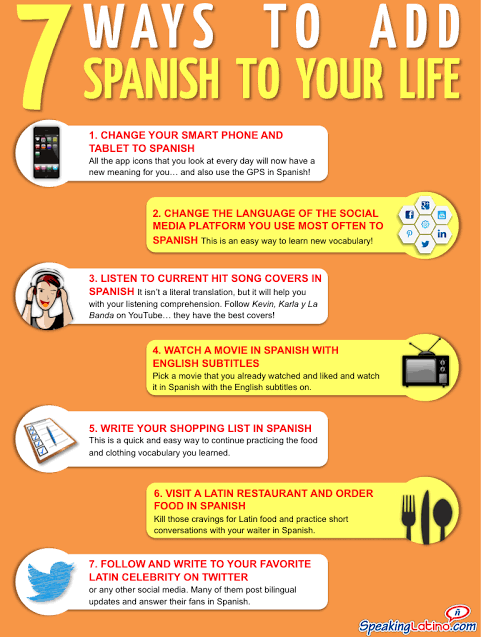
8. Find Opportunities to Use Spanish
Real-world practice can accelerate your progress. Try to find opportunities to communicate in Spanish whenever possible.
You could practice with:
- A Spanish tutor
- A language exchange partner
- Spanish-speaking friends
- Online conversation groups
- Native speakers
- Spanish-speaking communities
Making mistakes is part of learning. Every conversation gives you an opportunity to improve.
9. Think in Spanish
Translation can slow you down. As your vocabulary improves, begin thinking directly in Spanish.
For example, instead of thinking:
“I need water” → translate → “Necesito agua,”
try to associate the idea directly with:
“Necesito agua.”
Start with simple thoughts and gradually build longer sentences. This technique can help you become more comfortable using Spanish naturally.
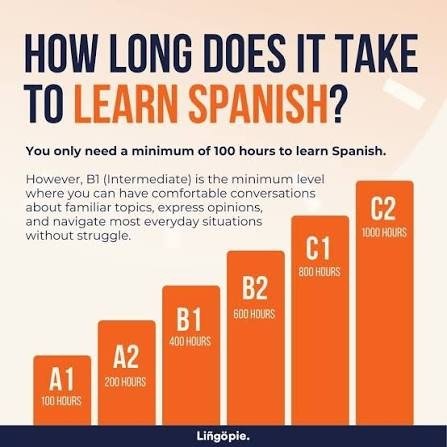
How Long Does It Take to Learn Spanish?
There is no single answer because everyone learns at a different pace. Your progress depends on how often you practice, your learning methods, your previous language experience, and how much Spanish you hear and use.
Someone who practices for 30–60 minutes every day may progress much faster than someone who studies only occasionally.
Instead of focusing entirely on a deadline, set practical milestones. For example, you might aim to introduce yourself, understand basic conversations, order food, ask for directions, and eventually hold longer conversations.

Common Mistakes Spanish Learners Should Avoid
If your goal is to learn Spanish quickly, avoid relying on only one type of study.
Common mistakes include:
- Spending too much time memorizing grammar
- Avoiding conversations because of mistakes
- Learning words without context
- Practicing inconsistently
- Translating every sentence
- Ignoring listening practice
- Trying to become perfect before speaking
A balanced approach involving vocabulary, grammar, listening, speaking, reading, and writing is more effective.
A Simple Spanish Learning Schedule
You can use this weekly routine to stay consistent:
Monday: Vocabulary and pronunciation
Tuesday: Listening practice
Wednesday: Speaking practice
Thursday: Grammar and sentence building
Friday: Spanish reading
Saturday: Conversation practice
Sunday: Review everything you learned
Adjust the schedule according to your available time and learning goals.

Final Thoughts
If you are wondering how to learn Spanish fast, focus on using the language rather than simply studying it. Learn common words and phrases, listen to Spanish every day, speak regularly, and practice with real people whenever possible.
You do not need to know everything before you begin communicating. Start with simple Spanish, make mistakes, learn from them, and gradually increase your skills. With consistent daily practice, Spanish can become a natural part of your routine.
