
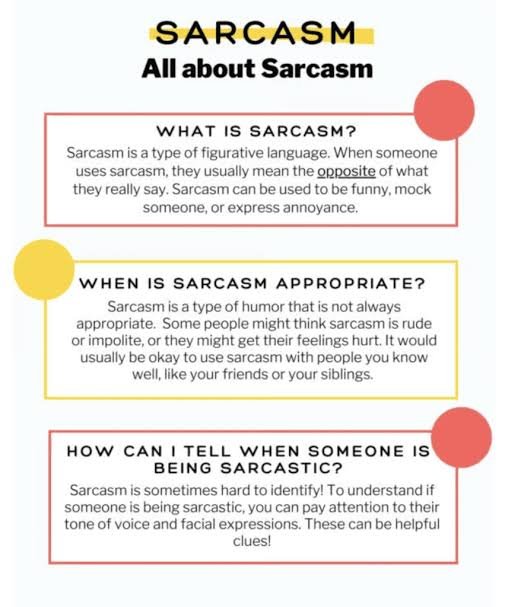
The word sarcastic is commonly used to describe a particular style of communication in which someone says something that may appear positive, ordinary, or serious on the surface but actually means something different, often the opposite. Sarcasm can be funny, clever, playful, or even hurtful depending on the situation, tone, relationship between the people, and intention behind the words.
In everyday conversations, people often use sarcastic comments to make jokes, express frustration, point out something obvious, or react to an unusual situation. Because sarcasm can have more than one meaning, understanding it requires paying attention not only to the words but also to the speaker’s tone, facial expression, timing, and context.
What Does “Sarcastic” Mean?
Sarcastic is an adjective used to describe a person, comment, remark, or tone that involves sarcasm.
For example, imagine someone arrives thirty minutes late to a meeting and another person says:
“Wow, you’re right on time!”
The literal words sound positive, but the actual meaning is the opposite. The speaker is pointing out that the person is late. This is a simple example of a sarcastic statement.
Sarcasm often depends on contrast between what is said and what is actually intended.
What Is Sarcasm?
Sarcasm is a form of communication in which a speaker uses words that have an intended meaning different from their literal meaning. It is often used for humor, criticism, exaggeration, or emphasis.
Sarcasm can appear in casual conversations, comedy, movies, television shows, books, social media posts, and online comments.
For example:
Situation: Someone forgets their umbrella during heavy rain.
Sarcastic response: “Excellent planning!”
The speaker does not genuinely believe that forgetting the umbrella was excellent planning. The statement is humorous because the literal meaning conflicts with the situation.
Why Do People Use Sarcasm?
People use sarcastic language for many different reasons. One of the most common reasons is humor. A well-timed sarcastic comment can make friends laugh and make an ordinary conversation more entertaining.
Sarcasm can also be used to express annoyance. Instead of directly saying that someone has made a poor decision, a person may use a sarcastic remark to communicate criticism.
Another reason people use sarcasm is to make an observation more memorable. A humorous comment can sometimes communicate an idea more effectively than a straightforward statement.
However, sarcasm is not always understood in the same way by everyone. What one person considers funny, another person may consider rude or disrespectful.
Examples of Sarcastic Statements
Here are some simple examples of sarcasm:
Example 1: Bad Weather
Someone looks outside and sees heavy rain.
Comment: “What a beautiful day for a picnic.”
The speaker obviously does not believe the weather is ideal for a picnic.
Example 2: A Difficult Task
Someone receives an extremely complicated assignment.
Comment: “This should be easy.”
The speaker means that the task is actually difficult.
Example 3: Forgetting Something
A person forgets their keys at home.
Comment: “Great memory!”
The statement is sarcastic because forgetting the keys suggests the opposite.
Example 4: Slow Internet
A video takes several minutes to load.
Comment: “The internet is incredibly fast today.”
Again, the speaker means that the internet is very slow.
Example 5: Messy Room
Someone enters an extremely messy room.
Comment: “I see you’ve been keeping everything perfectly organized.”
The contrast creates the sarcastic effect.
Sarcastic Tone
Tone plays a major role in sarcasm. The same words can have completely different meanings depending on how they are spoken.
For example, saying:
“Nice job.”
can be a sincere compliment if spoken warmly after someone succeeds. However, it can become sarcastic if someone makes an obvious mistake and the words are delivered with a particular tone.
In spoken communication, people may recognize sarcasm through voice changes, pauses, facial expressions, or exaggerated emphasis.
Written communication is more complicated because readers cannot always hear the speaker’s tone.
Sarcasm in Text Messages
Sarcasm is especially common in texting and online communication. People frequently use short sarcastic phrases, emojis, punctuation, or exaggerated statements to communicate humor.
For example:
“Oh sure, because that worked so well last time.”
A person reading this message needs to understand the previous conversation to recognize whether the statement is serious or sarcastic.
Because digital communication lacks many visual and vocal cues, sarcasm can sometimes be misunderstood. A sentence intended as a joke may appear rude or angry when read without context.
Sarcasm on Social Media
Social media has made sarcastic communication extremely popular. Users often post sarcastic captions, comments, memes, and reactions.
Sarcasm works particularly well in short-form content because a brief statement can communicate a humorous observation quickly.
For example, someone might post a photograph of a completely disorganized desk with the caption:
“I absolutely love being organized.”
The humor comes from the obvious contradiction.
However, sarcastic social media posts can sometimes be misunderstood by people who do not know the creator personally. This is especially true when a post is shared outside its original context.
Sarcasm and Humor
Sarcasm and humor often overlap, but they are not exactly the same thing.
Humor is a broad category that includes jokes, comedy, wordplay, storytelling, satire, physical comedy, and many other forms of entertainment.
Sarcasm is a particular communication technique that can be used as part of humor.
A sarcastic statement does not always make people laugh. Sometimes it is used to criticize, express disappointment, or make a serious point.
Sarcasm and Irony
People often use the terms sarcasm and irony interchangeably, but there are differences.
Irony generally involves a contrast between expectations and reality, or between what appears to be true and what actually happens.
Sarcasm is usually a form of expression directed toward a person, situation, or idea, often involving mock praise or deliberately opposite wording.
For example, a fire station experiencing a small fire could be described as an ironic situation. Saying “Fantastic fire safety!” after the event could be a sarcastic comment.
The two concepts can overlap, but they are not identical.
Sarcasm and Satire
Sarcasm is also different from satire.
Satire uses humor, exaggeration, irony, or ridicule to criticize people, behaviors, institutions, or social problems. It can be found in literature, television, comedy, political commentary, and other forms of media.
Sarcasm may be one tool used within satire, but a sarcastic statement can also be completely unrelated to social or political criticism.
When Sarcasm Can Be Funny
Sarcasm is most likely to be funny when everyone involved understands the intention.
Among close friends, sarcastic comments can become part of a shared sense of humor. Friends may understand each other’s personalities and know when a comment is playful rather than serious.
Good timing also matters. A short, unexpected sarcastic statement can be much funnier than a long explanation.
The best sarcastic humor usually depends on context rather than cruelty.
When Sarcasm Can Be Hurtful
Sarcasm can become harmful when it is used to embarrass, insult, or humiliate someone.
For example, repeatedly making sarcastic comments about another person’s intelligence, appearance, abilities, or mistakes may damage a relationship.
A speaker may believe they are joking, but the listener may experience the comment as criticism.
This is why understanding the audience is important. A sarcastic style that works among close friends may not be appropriate in a workplace, classroom, or formal setting.
Sarcasm in the Workplace
Sarcasm can be risky in professional communication. Coworkers may have different personalities and different interpretations of humor.
A sarcastic comment that seems harmless to one employee may sound disrespectful to another.
Professional environments generally benefit from clear and respectful communication. Sarcasm can still appear in friendly workplace conversations, but it should be used carefully, especially when discussing mistakes, performance, deadlines, or sensitive topics.
How to Recognize a Sarcastic Person
A person who frequently uses sarcasm may have recognizable communication habits. They may exaggerate statements, use obvious contradictions, emphasize certain words, or deliver compliments in situations where criticism is clearly intended.
However, there is no single way to identify sarcasm. Context remains extremely important.
For example, the phrase “That’s great” could be sincere, sarcastic, disappointed, excited, or confused depending on the situation.
Listening to the complete conversation is often more useful than analyzing one sentence.
How to Use Sarcasm Effectively
If you enjoy sarcastic humor, there are several ways to make it more effective.
First, understand your audience. A joke that works with a close friend may not work with a stranger.
Second, pay attention to timing. Sarcasm is often most effective when the comment naturally fits the situation.
Third, avoid making personal attacks. Humor does not need to hurt someone to be funny.
Fourth, use context. The clearer the situation, the easier it is for people to understand the intended meaning.
Finally, know when to stop. If someone appears uncomfortable, continuing the sarcasm may turn humor into conflict.
Sarcasm in Movies and Television
Sarcastic characters are common in movies and television because sarcasm can create memorable dialogue.
Writers often give characters distinctive sarcastic personalities to make them entertaining or to show confidence, frustration, intelligence, or skepticism.
Sarcastic dialogue can also reveal relationships between characters. Two close friends may use sarcasm as a sign of familiarity, while sarcastic comments between enemies may increase tension.
Because actors can use facial expressions and vocal tone, sarcasm is often easier to understand on screen than in written communication.
Sarcasm in Everyday Life
People use sarcasm in many ordinary situations.
Someone may use sarcasm after making a mistake, when reacting to unexpected news, while joking with friends, or when describing an inconvenient situation.
For example:
“Just what I needed today!”
If someone’s computer suddenly stops working before an important presentation, the statement may be sarcastic. The person does not actually want another problem; they are expressing frustration through humor.
This kind of everyday sarcasm can make difficult moments feel slightly lighter.
The Difference Between Sarcastic and Rude
Being sarcastic does not automatically mean being rude.
Sarcasm can be playful and harmless when everyone understands the joke. However, sarcasm can also be used as a form of indirect criticism.
The difference often depends on intention, context, relationship, and effect.
A useful rule is to consider whether the comment creates laughter and connection or embarrassment and discomfort. If a sarcastic remark consistently hurts others, it may be better to communicate more directly.
Benefits of Understanding Sarcasm
Understanding sarcasm can improve communication. It helps people recognize when a statement is not meant literally.
This is especially important when watching comedy, reading online discussions, communicating with friends, or interacting with people from different communication styles.
Recognizing sarcasm also encourages people to consider context before reacting emotionally to a statement.
Conclusion
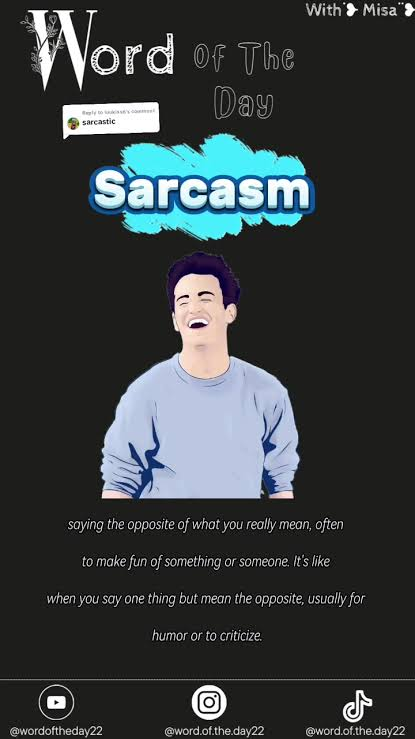
The word sarcastic describes a style of communication that often says one thing while intending another. Sarcasm can be humorous, clever, expressive, or critical, and its meaning often depends heavily on tone and context.
From everyday conversations to social media, movies, television, and workplace interactions, sarcasm remains a common part of modern communication. Used carefully, it can create humor and make conversations more interesting. Used without consideration, however, it can cause misunderstanding or hurt feelings.
The key to effective sarcasm is balance. Knowing your audience, choosing the right moment, understanding the situation, and avoiding unnecessarily personal remarks can make sarcastic humor more enjoyable and respectful.
Ultimately, sarcasm is not simply about saying the opposite of what you mean. It is about understanding language, context, timing, and human interaction. When used thoughtfully, it can be a powerful and entertaining way to express an idea.
