
The phrase “Maiden Name Mean” is commonly used when talking about a person’s family name before marriage. It is especially common in forms, official documents, family history, genealogy, and everyday conversations. Understanding the maiden name meaning can help people correctly complete forms, understand family relationships, and interpret questions about a person’s name.
Although the term is traditionally associated with women who change their surname after marriage, modern naming practices are much more diverse. Some people keep their original surname, some adopt their spouse’s surname, while others combine or change their surnames in different ways.
What Is the Maiden Name Meaning?
The simplest maiden name meaning is:
A maiden name is a surname a woman used before marriage, particularly when she later changes her surname after getting married.
For example, imagine that a woman was born Emily Carter and later married someone named James Wilson. If she changes her surname to Emily Wilson, then Carter would traditionally be described as her maiden name.
In other words:
- Before marriage: Emily Carter
- After marriage: Emily Wilson
- Maiden name: Carter
The term generally refers to the surname associated with a woman before marriage rather than her married surname.
Maiden Name Meaning in Simple Words
In very simple language, a maiden name means the last name a woman had before marriage.
For example:
Sarah Brown → Sarah Miller
Here, “Brown” is Sarah’s maiden name if she changed her surname to Miller after marriage.
The term is often used when someone needs to identify a person’s previous surname.
Why Is It Called a Maiden Name?
The word “Maiden Name Mean” has historically been used to describe an unmarried young woman. Because surnames traditionally changed for many women after marriage, the surname they used before marriage became known as their “maiden name.”
This terminology developed from older social and naming customs in which women commonly adopted their husband’s surname after marriage.
However, naming practices have changed considerably over time. Today, not everyone follows this traditional pattern.
Examples of Maiden Names
Understanding examples can make the meaning much easier to remember.
Example 1
Before marriage:
Anna Davis
After marriage:
Anna Thompson
Maiden name: Davis
Example 2
Before marriage:
Laura Smith
After marriage:
Laura Johnson
Maiden name: Smith
Example 3
Before marriage:
Emma Williams
After marriage:
Emma Brown
Maiden name: Williams
In each example, the original surname is the name traditionally referred to as the maiden name.
Does Everyone Have a Maiden Name?
No. The term does not apply to everyone.
A person may not have a “Maiden Name Mean” in the traditional sense if:
- They never marry.
- They keep their original surname after marriage.
- They use a different naming tradition.
- They combine surnames.
- They change their name for reasons unrelated to marriage.
For example, if Maria Garcia marries David Lee but continues using Maria Garcia, Garcia remains her surname. In this situation, people may still refer to Garcia as her birth or pre-marriage surname, but calling it a “Maiden Name Mean” depends on the context and terminology being used.
Maiden Name vs. Birth Name
The terms maiden name and birth name are related, but they are not always exactly the same.
A birth name can refer broadly to the name a person was given or used at birth. A maiden name, traditionally, specifically refers to a woman’s surname before marriage.
For example:
Birth name: Emily Carter
Married name: Emily Wilson
Maiden name: Carter
The distinction becomes especially important when discussing legal documents or Maiden Name Meaning genealogy.
Maiden Name vs. Previous Name
A previous name can refer to any name someone used in the past. It does not necessarily relate to marriage.
For example, a person might legally change their surname for personal reasons. Their former surname could be called a previous name or former name.
A Maiden Name Mean, by contrast, traditionally relates specifically to the surname used before marriage.
Maiden Name on Forms
People sometimes encounter the question “What is your maiden name?” while completing forms or applications.
Usually, this question is asking for the surname you used before marriage.
For example, if your name is currently:
Jennifer Adams
and before marriage your surname was:
Jennifer Clark
then your maiden name would traditionally be:
Clark
However, the exact meaning can depend on the form. If a document uses the phrase “mother’s maiden name,” it normally means the mother’s surname before marriage.
What Does “Mother’s Maiden Name” Mean?
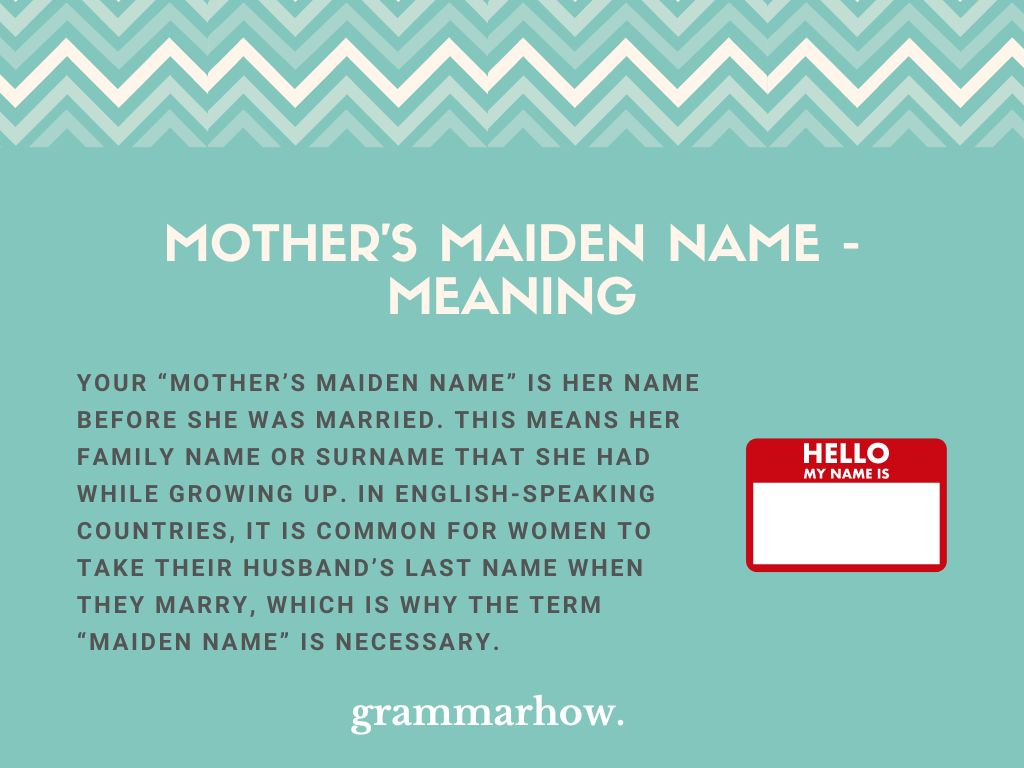
The phrase “mother’s maiden name” usually means the surname your mother had before she married.
For example:
- Mother’s name before marriage: Linda Parker
- Mother’s married name: Linda Williams
- Mother’s maiden name: Parker
This phrase has historically appeared on forms and identity-related questions.
People should always follow the exact instructions on a particular form because naming requirements can differ between organizations and countries.
Maiden Name in Genealogy
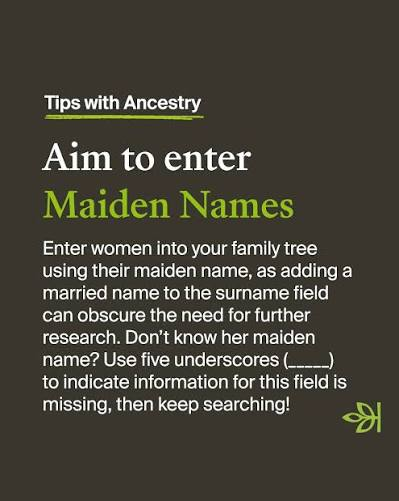
The concept of a maiden name is particularly useful in genealogy and family-history research.
When researchers build a family tree, they often record a woman’s surname before marriage so that they can connect her to her parents, siblings, and other relatives.Maiden Name Meaning
For example:
Robert Wilson + Mary Carter
If Mary later became Mary Wilson, recording “Carter” can help researchers identify her family of origin.
A pre-marriage surname can therefore provide an important clue when tracing historical records.
Why Maiden Names Matter in Family History
Family names can help researchers discover connections between different generations.
A person’s married surname may make it difficult to identify their parents or relatives, especially when working with old records. Knowing the surname used before marriage can make searches through birth records, marriage records, census records, newspapers, and other historical sources easier.
This is one reason the concept remains important in genealogy.
Maiden Name in Different Cultures
Not every culture follows the same naming system.
In some societies, women commonly keep their surnames after marriage. In others, changing the surname after marriage is common. Some cultures use family naming systems that do not fit neatly into the traditional concept of a maiden name.
Because of these differences, the phrase should be understood within its cultural and legal context.
Do Women Have to Change Their Surname After Marriage?
No. Whether someone changes their surname after marriage depends on personal choice, culture, tradition, and applicable legal procedures.
A person may:
- Keep their original surname.
- Take their spouse’s surname.
- Combine surnames.
- Hyphenate surnames.
- Use different surnames professionally and personally.
- Legally change their name in another way.
Therefore, the traditional idea of a maiden name should not be treated as a universal rule.
Can a Maiden Name Be Used Professionally?
Yes. Some people continue using their pre-marriage surname professionally even if they use a different surname socially or legally.
This can be especially common when someone has already established a professional career, published research, created artwork, built a business, or developed a public identity under their original surname.
For this reason, a person’s professional name and legal surname may sometimes be different.
Maiden Name Meaning in Legal Contexts
The meaning of “maiden name” can vary slightly depending on the legal document or organization.
Some official forms may instead use terms such as:
- Former surname
- Previous surname
- Birth surname
- Surname at birth
- Name before marriage
These terms can be more precise in situations involving legal identification.
When completing an official document, it is important to read the instructions carefully rather than assuming that every form uses “maiden name” in exactly the same way.
How to Answer “What Is Your Maiden Name?”
If a form asks for your maiden name and you changed your surname after marriage, you would normally provide the surname you used before marriage.
For example:
Current name: Olivia Anderson
Name before marriage: Olivia Martinez
Maiden name: Martinez
If you never changed your surname after marriage, check the form’s instructions because the organization may use “maiden name” differently.
Is Maiden Name the Same as Last Name?
Not necessarily.
A last name is the surname a person currently uses or is identified by. A maiden name traditionally refers to a woman’s surname before marriage.
For example:
Current last name: Anderson
Maiden name: Martinez
So, the two terms can describe different surnames.
Is Maiden Name the Same as Middle Name?
No.
A middle name and a maiden name are completely different concepts.
For example:
Olivia Marie Martinez
Here:
- Olivia = first name
- Marie = middle name
- Martinez = surname
If Olivia later changes her surname to Anderson after marriage, Martinez could traditionally be described as her maiden name.
Common Questions About Maiden Name Meaning
What does maiden name mean?
A maiden name traditionally means a woman’s surname before marriage, especially when she later adopts a different surname after marriage.
What is an example of a maiden name?
If someone was Sarah Brown before marriage and became Sarah Davis after marriage, “Brown” is traditionally her maiden name.
Does maiden name mean birth name?
Not always. The terms can overlap, but “maiden name” traditionally refers specifically to a woman’s surname before marriage.
What is my mother’s maiden name?
It generally means the surname your mother used before she married.
Can a married woman keep her maiden name?
Yes. A person may choose to keep their original surname after marriage.
Is maiden name still a commonly used term?
Yes, the phrase remains widely understood, although terms such as “birth surname” or “surname at birth” may be preferred in some contexts.
Modern Use of the Term
Today, people are increasingly aware that naming traditions differ from person to person. Because of this, some organizations prefer more inclusive terms such as birth surname or surname at birth.
Nevertheless, “maiden name” remains a familiar phrase in everyday English and is still commonly understood to mean a woman’s surname before marriage.
Conclusion
The maiden name meaning is relatively simple: it traditionally refers to the surname a woman used before marriage, particularly when she later changes her surname after marriage.
For example, if Emily Carter becomes Emily Wilson after marriage, “Carter” is traditionally her maiden name.
The term is useful in everyday conversations, forms, family history, genealogy, and discussions about names. However, naming practices vary widely, and not everyone changes their surname after marriage. Understanding the context is therefore important when answering questions about a maiden name.
Whether you are completing a form, researching your family tree, or simply trying to understand the phrase, knowing the difference between a maiden name, birth name, current surname, and previous name can help you use the terminology correctly.
