
SEO Title: Genotype Definition Biology: 7 Important Facts You Should Know
Meta Description: Learn the genotype definition biology, including what genotype means, how alleles work, genotype examples, and the difference between genotype and phenotype.
What Is the Genotype Definition in Biology?
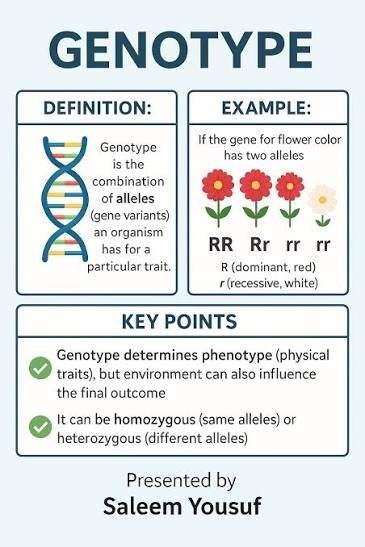
The genotype definition biology refers to the complete genetic makeup of an organism or the specific combination of alleles an organism has for a particular gene.
Every living organism receives genetic information from its biological parents. This information is stored in DNA and helps determine many biological characteristics. A genotype can influence traits such as blood type, certain physical characteristics, and susceptibility to some inherited conditions.
Understanding genotype is one of the basic foundations of genetics and helps students understand how characteristics are inherited from one generation to another.
What Is a Gene?
A gene is a section of DNA that contains information used by cells to produce a functional product, often a protein or functional RNA. Genes contribute to biological characteristics and processes.
Genes are located on chromosomes. Different versions of the same gene are called alleles.
For example, a gene involved in a particular characteristic may have different alleles. The combination of alleles an individual carries makes up their genotype for that gene.
What Are Alleles?
Alleles are alternative versions of a gene. An individual usually inherits one allele from each biological parent for genes located on paired chromosomes.
For a simplified example, a gene might have two alleles represented as A and a.
Possible combinations include:
- AA — two copies of one allele
- Aa — two different alleles
- aa — two copies of the other allele
These letter combinations are simplified representations commonly used when teaching basic genetics.
Genotype vs. Phenotype
Genotype Definition Biology and phenotype are closely connected, but they have different meanings.
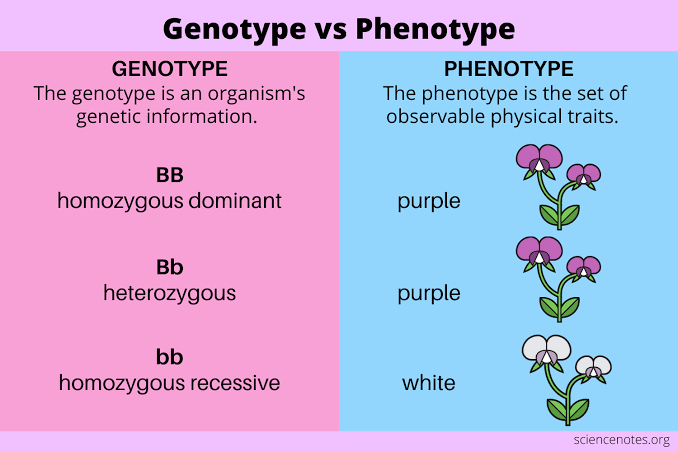
Genotype describes an organism’s genetic makeup. Phenotype describes observable characteristics or measurable traits that result from genetic and environmental influences.
For example, an individual’s genotype can contribute to a particular biological trait, while factors such as nutrition, temperature, lifestyle, and other environmental conditions may also affect how that trait appears.
Therefore:
Genotype = genetic information
Phenotype = observable characteristics
Homozygous Genotype
An organism is described as homozygous for a particular gene when it has two identical alleles.
For example:
- AA is homozygous.
- aa is also homozygous.
Homozygous genotypes are important when studying inheritance because they can influence which alleles an organism passes to its offspring.
Heterozygous Genotype
An organism is heterozygous when it has two different alleles for a particular gene.
For example:
Aa
In simple Mendelian genetics, a heterozygous genotype can contain a dominant allele and a recessive allele. However, not all real genetic traits follow simple dominant-recessive inheritance.
Why Is Genotype Important?
Genotype is important because it helps scientists understand genetic variation and inheritance.
Studying genotypes can help researchers:
- Understand how traits are inherited.
- Identify genetic differences between individuals.
- Study inherited conditions.
- Analyze genetic variation in populations.
- Understand evolutionary processes.
- Predict possible genetic outcomes in controlled crosses.
- Investigate relationships between genes and biological traits.
Genetic information is also important in areas such as evolutionary biology, genetics research, agriculture, and biotechnology.
Examples of Genotypes
A simple genetics model can use letters to represent alleles:
| Genotype | Description |
|---|---|
| AA | Homozygous |
| Aa | Heterozygous |
| aa | Homozygous |
These examples are useful for understanding basic inheritance. Real organisms often have much more complicated genetic systems, and many characteristics are influenced by multiple genes and environmental factors.
How Are Genotypes Passed to Offspring?
In organisms that reproduce sexually, offspring receive genetic material from both biological parents.
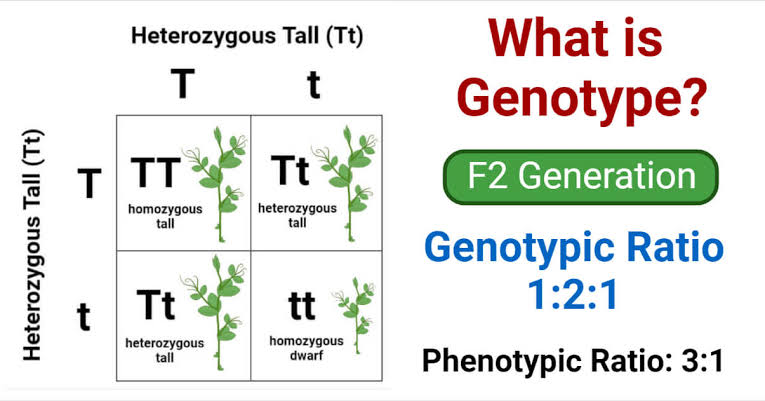
During the formation of reproductive cells, chromosomes are separated so that reproductive cells receive one chromosome from each pair. When two reproductive cells combine during fertilization, the offspring receives genetic material from both parents.
This process creates different combinations of alleles and contributes to genetic variation.
Genotype and Genetic Variation
Different genotypes contribute to genetic variation within populations. Genetic variation can arise through processes such as mutation, recombination, and the reshuffling of genetic material during reproduction.
Variation is important for evolution because populations with genetic differences can respond differently to environmental pressures.
Natural selection, genetic drift, mutation, and gene flow can all affect genetic variation and allele frequencies within populations.
Frequently Asked Questions
What is genotype in simple terms?
A genotype is the genetic makeup of an organism, especially the specific alleles it carries for a particular gene.
What are three examples of genotypes?
In a simple single-gene model, AA, Aa, and aa are examples of possible genotypes.
Is genotype the same as phenotype?
No. Genotype refers to genetic information, while phenotype refers to observable or measurable characteristics influenced by genotype and environmental factors.
What does homozygous mean?
Homozygous means having two identical alleles for a particular gene.
What does heterozygous mean?
Heterozygous means having two different alleles for a particular gene.
Conclusion
The genotype definition biology students need to remember is that a genotype represents an organism’s genetic makeup or its specific allele combination for a particular gene. Genotypes help explain inheritance, genetic variation, and differences between individuals.
Learning the difference between genotype, phenotype, genes, and alleles provides an essential foundation for understanding genetics and modern biology.
