
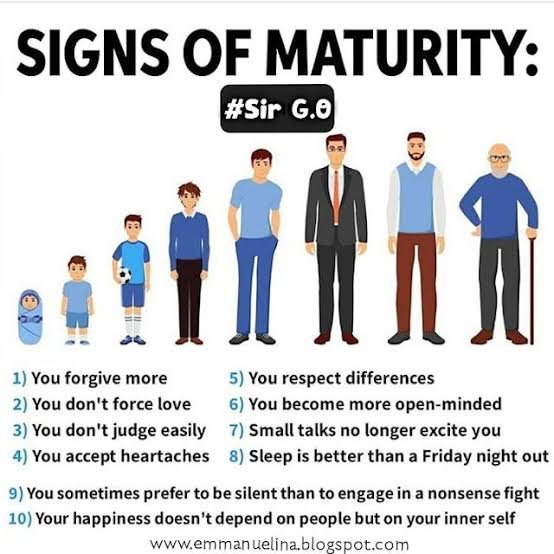
Maturity is a quality that develops as a person gains experience, learns from mistakes, understands emotions, and becomes more responsible in life. Although people often connect maty with age, age alone does not determine whether someone is mature. A young person can demonstrate remarkable maturiy, while an older person may still struggle with emotional control, responsibility, or decision-making.
True maturity is reflected in the way a person thinks, communicates, handles difficult situations, treats other people, and responds to life’s challenges. It is not about being serious all the time or pretending to know everything. Instead, is about developing wisdom, patience, self-awareness, emotional balance, and responsibility.
What Is Maturity?
Maturity can be described as the ability to respond to life with understanding, responsibility, and emotional balance. A mature person considers the consequences of their actions before making decisions. They understand that every choice can have an impact on themselves and others.
Maturity also involves accepting reality. Life does not always provide what we want, and people do not always behave the way we expect. A mature individual learns how to deal with disappointment without allowing temporary emotions to control their entire life.
Matrity is therefore a combination of emotional intelligence, mental growth, practical responsibility, and personal development.
Maturity Is More Than Age
One of the biggest misunderstandings about maurity is that it automatically comes with age. Growing older provides opportunities to gain experience, but experience alone does not guarantee maturty.
A person becomes mature when they learn from their experiences.
For example, two people may experience the same failure. One person may blame everyone else, refuse to accept responsibility, and repeat the same mistakes. Another person may examine what went wrong, accept responsibility, learn from the experience, and improve.
The second response demonstrates mturity.
This is why matuity should be measured by behavior and understanding rather than simply by someone’s age.
Emotional Maturity
Emotional matuity is one of the most important aspects of personal growth. It involves recognizing emotions, understanding their causes, and responding to them appropriately.
Emotionally mature people still experience anger, sadness, jealousy, disappointment, and frustration. They are not emotionless. Instead, they understand that emotions are natural but do not always need to control their actions.
For example, when an emotionally mature person becomes angry, they may take some time to calm down before responding. They understand that saying something hurtful in the heat of the moment can create long-term problems.
Emotional maturity also involves communicating feelings honestly without attacking or disrespecting others.
Mental Maturity
Mental maturity refers to the development of a thoughtful and balanced way of thinking. A mentally mature person understands that there can be multiple perspectives on a situation.
They do not automatically assume that their opinion is always correct. Instead, they listen, consider evidence, ask questions, and remain open to learning.
Mental maturity allows people to accept that they may sometimes be wrong. Admitting a mistake is not a weakness. In fact, recognizing mistakes is often a sign of strong character.
Signs of Maturity
There are many behaviors that can indicate mturity. Some of the most important signs include:
1. Thinking Before Speaking
A mature person understands that words have consequences. They try to think before speaking, especially during arguments or emotionally difficult situations.
2. Accepting Responsibility
Mature individuals do not constantly blame other people for their problems. They recognize their own role in a situation and take responsibility when appropriate.
3. Controlling Emotional Reactions
Maturit does not mean avoiding emotions. It means learning how to manage emotional reactions instead of allowing anger or frustration to dictate behavior.
4. Respecting Other People
A mature person understands that everyone deserves basic respect, even when opinions are different.
5. Knowing When to Apologize
Apologizing when you are wrong is a powerful sign of matuity. It requires humility and self-awareness.
6. Learning From Mistakes
Everyone makes mistakes. Mature people use mistakes as opportunities to learn rather than repeating the same behavior.
7. Understanding Boundaries
Maturity involves recognizing that people have personal boundaries. A mature person respects their own boundaries and the boundaries of others.
8. Avoiding Unnecessary Drama
Mature people understand that not every disagreement deserves an argument. Sometimes the healthiest response is to remain calm and move forward.
Maturity in Relationships
Relationships are one of the clearest areas where maturity becomes important. Whether it is a friendship, family relationship, professional relationship, or romantic relationship, maturiy can make communication healthier and more respectful.
A mature relationship is based on trust, honesty, communication, respect, and understanding.
People in healthy relationships may disagree from time to time. However, disagreement does not have to become disrespect. Mature individuals learn how to discuss problems without intentionally insulting, threatening, or humiliating one another.
Maturity in Friendship
Friendship requires understanding and mutual respect. A mature friend understands that people have different responsibilities and cannot always be available.
A mature friendship does not depend on constant attention. Instead, it is built on trust and genuine care.
Mature friends can communicate when something is wrong rather than immediately ending the friendship because of a misunderstanding.
They also understand the importance of supporting each other without becoming controlling.
Maturity in Romantic Relationships
Romantic relationships require emotional matrity because feelings can be intense. Love, jealousy, disappointment, insecurity, and expectations can sometimes create conflict.
Maturity helps individuals communicate their needs clearly while respecting their partner’s independence.
A mature relationship should not depend entirely on control or constant monitoring. Both people should be able to maintain their individuality while building a strong connection.
Maturty also means understanding that love does not justify disrespectful behavior.
Maturity and Communication
Good communication is one of the strongest signs of maurity.
Instead of saying:
“You never understand me.”
A mature person may explain:
“I feel misunderstood in this situation, and I would like to talk about it.”
The difference is important because mature communication focuses on solving the problem rather than attacking the person.
Listening is also part of communication. A mature person does not simply wait for their turn to speak. They genuinely try to understand what the other person is saying.
Maturity and Anger
Anger is a normal human emotion. The important issue is how a person handles it.
Immature reactions may include shouting, insulting, threatening, breaking things, or intentionally hurting someone emotionally.
A mature response involves creating space, calming down, identifying the cause of the anger, and communicating when it is possible to have a productive conversation.
Learning to manage anger can improve relationships and prevent many unnecessary conflicts.
Maturity and Patience
Patience is an important part of maturity because meaningful results often require time.
People may want immediate success, instant answers, or quick solutions. However, life rarely works that way.
Education, careers, relationships, financial stability, and personal growth often develop gradually.
A mature person understands that temporary difficulties do not necessarily mean permanent failure. They remain patient while continuing to work toward their goals.
Maturity and Responsibility
Responsibility is closely connected to mturity.
A responsible person understands their obligations and tries to fulfill them. This may involve responsibilities related to work, education, family, finances, or personal commitments.
Responsibility also means understanding consequences.
Before making a major decision, a mature person considers how that decision might affect the future.
Financial Maturity
Financial maturty means developing responsible habits around money.
A financially mature person understands the difference between needs and wants. They try to manage their spending, plan for future expenses, and avoid unnecessary financial decisions.
Financial matrity does not necessarily depend on earning a large amount of money. Someone with a modest income can still demonstrate excellent financial responsibility through careful planning and disciplined spending.
Maturity at Work
Professional matrity is important in almost every career.
A mature employee understands the importance of punctuality, communication, teamwork, accountability, and professionalism.
When a mistake happens at work, a mature person does not immediately blame a colleague. They focus on understanding the problem and finding a solution.
Professional matrity also means accepting constructive criticism without treating every suggestion as a personal attack.
Maturity and Self-Respect
Self-respect is another important part of maturit
A mature person understands their own value without needing constant approval from everyone around them.
They can say no when necessary. They understand that protecting their peace and personal boundaries is important.
However, self-respect is different from arrogance. A mature person can value themselves while still respecting other people.
Maturity Means Knowing When to Walk Away
Sometimes maturity means knowing when to leave a situation.
Not every argument needs to be won. Not every person needs to be convinced. Not every disagreement requires a response.
There are situations where continuing an argument only creates additional stress.
Walking away from unnecessary conflict can be a mature decision when the situation is no longer productive or respectful.
Maturity and Forgiveness
Forgiveness can also be connected to maturity. Forgiving someone does not always mean forgetting what happened or allowing harmful behavior to continue.
Instead, forgiveness can mean choosing not to remain trapped in anger and resentment.
Mature people can learn from painful experiences while still moving forward.
Maturity and Independence
Independence is another important part of growing up.
A mature person gradually learns how to make decisions, solve problems, manage responsibilities, and take care of themselves.
Independence does not mean refusing all help. Mature people understand that asking for help when necessary is perfectly reasonable.
True independence means being capable of handling responsibilities while knowing when support is needed.
Maturity and Self-Awareness
Self-awareness means understanding your own personality, emotions, strengths, weaknesses, habits, and behavior.
A mature person regularly reflects on their actions.
They may ask themselves:
- Why did I react that way?
- Could I have handled the situation better?
- What can I learn from this experience?
- Did my behavior affect someone else?
- What should I change in the future?
This kind of reflection can encourage continuous personal growth.
How to Develop Maturity
Maturity can be developed through conscious effort. Some useful habits include:
Learn From Your Mistakes
Instead of being ashamed of every mistake, examine what happened and identify what you can learn.
Practice Patience
Try not to make important decisions while experiencing intense emotions. Give yourself time to think.
Listen More
Listening carefully can help you understand perspectives that are different from your own.
Accept Constructive Criticism
Not every criticism is useful, but helpful feedback can reveal areas where you can improve.
Take Responsibility
When you make a mistake, acknowledge it instead of searching for someone else to blame.
Think About Consequences
Before making an important decision, consider its possible short-term and long-term effects.
Set Healthy Boundaries
Learn when to say yes and when to say no. Respect the boundaries of others as well.
Keep Learning
Reading, observing, asking questions, and experiencing new situations can contribute to personal growth.
Maturity Does Not Mean Being Perfect
One of the most important things to understand is that mature people are not perfect.
They can still make mistakes. They can still become emotional. They can still feel insecure, angry, or disappointed.
The difference is that they are willing to recognize these emotions and improve their responses.
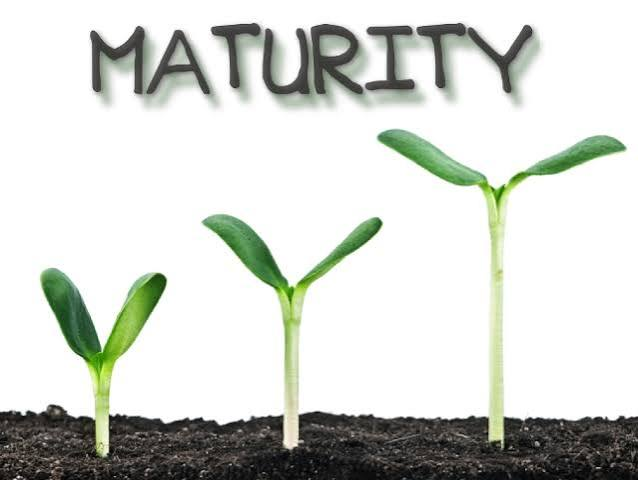
Maturity is a journey rather than a final destination.
Difference Between Maturity and Immaturity
Immaturity often involves reacting without thinking, avoiding responsibility, seeking constant validation, refusing to accept mistakes, and creating unnecessary conflict.
Maturity involves thoughtful decisions, responsibility, emotional control, self-awareness, patience, and respect.
This does not mean that people are permanently mature or immature. Everyone can behave maturely in one situation and poorly in another. Personal growth is an ongoing process.
Why Maturity Is Important
Maturity can improve almost every area of life.
It can help people:
- Build healthier relationships
- Make better decisions
- Handle stress more effectively
- Communicate clearly
- Manage responsibilities
- Learn from failures
- Develop self-confidence
- Avoid unnecessary conflicts
- Respect personal boundaries
- Build a more peaceful life
When people develop maturity, they often become better equipped to handle both success and failure.
Maturity and Personal Growth
Personal growth and maturity are closely connected. Every experience provides an opportunity to learn something.
A difficult situation can teach patience. A failure can teach resilience. A disagreement can teach communication. A responsibility can teach discipline.
The goal is not to avoid every difficult experience. The goal is to become wiser through those experiences.
Final Thoughts on Maturity
Maturity is much more than getting older. It is the gradual development of wisdom, emotional balance, responsibility, patience, self-awareness, and respect.
A mature person understands that they cannot control every situation or every person. What they can control is their own response.
True maturity means knowing when to speak and when to remain silent, when to fight for something and when to walk away, when to apologize, and when to protect personal boundaries.
Most importantly, maturity means continuing to learn. Nobody becomes completely mature overnight. It is a lifelong process shaped by experiences, challenges, relationships, mistakes, successes, and personal choices.
The more willing a person is to reflect, learn, take responsibility, and improve, the more mature they become. In the end, maturity is not about appearing older—it is about becoming wiser, calmer, stronger, and more understanding as a person.
